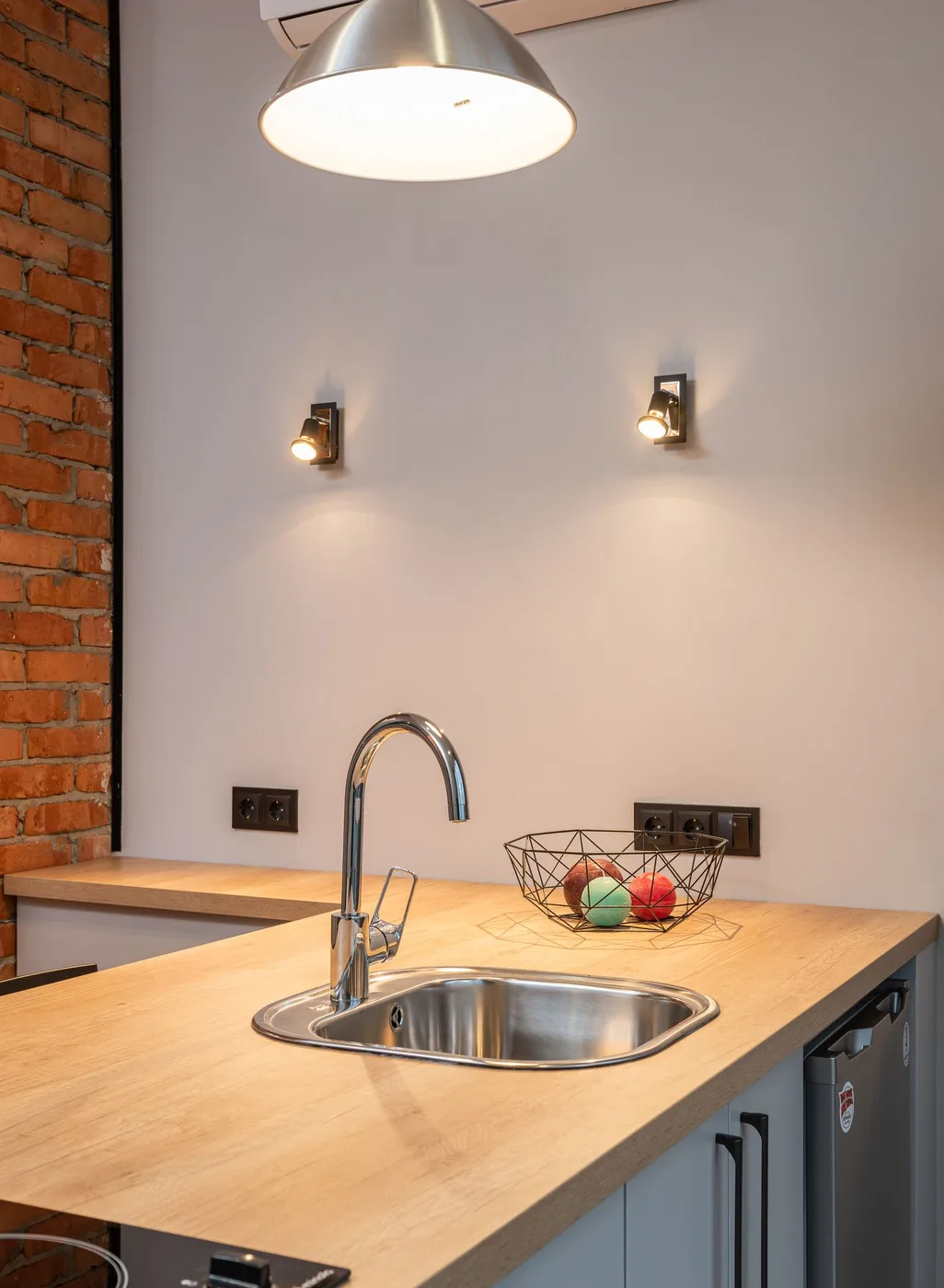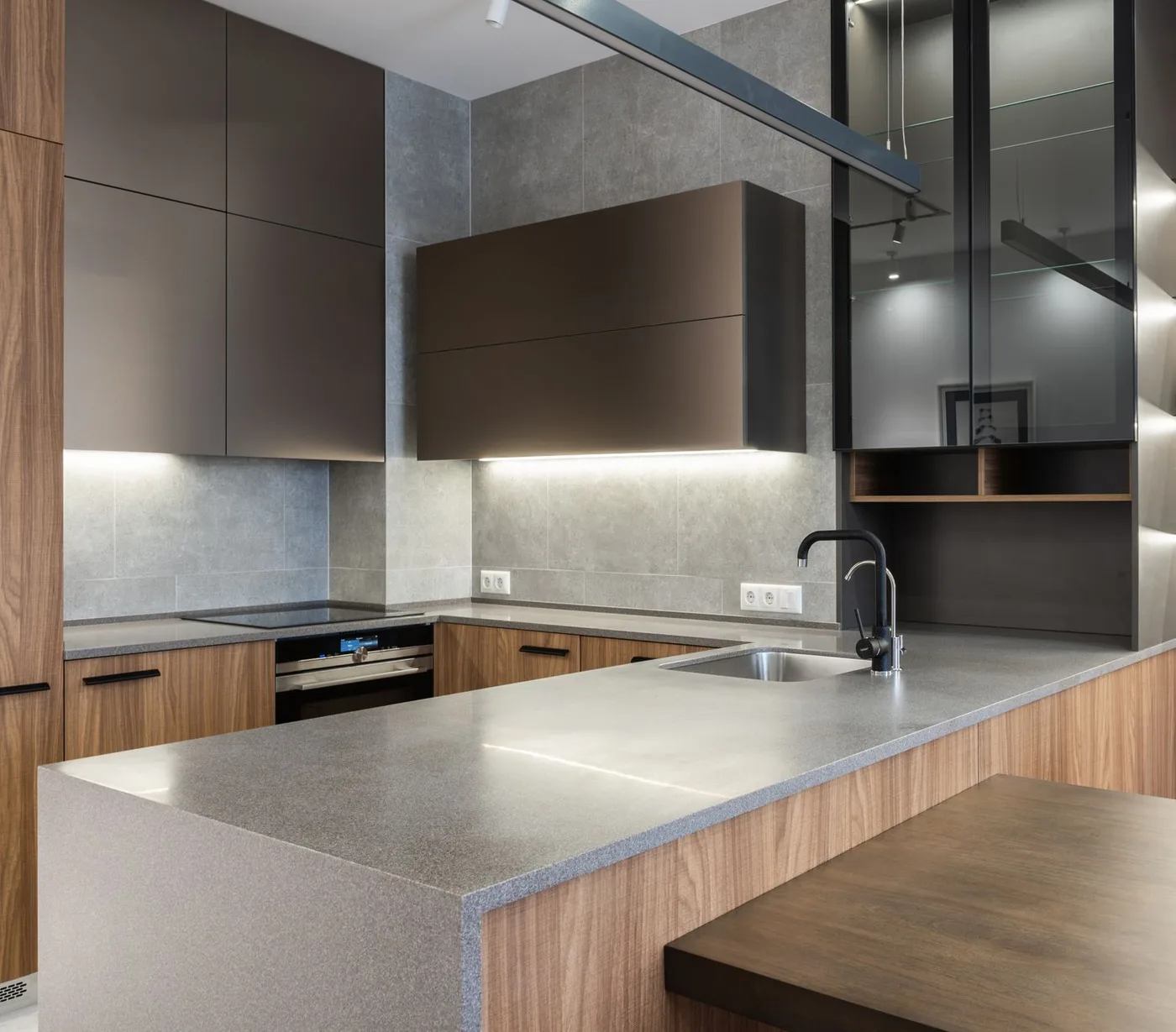
A dish rack has two jobs: support wet dishes and keep the resulting water from becoming a second cleanup task. In a compact kitchen it also competes with the board where dinner happens. Choosing the largest rack that fits the counter can leave you with an efficient drying area and nowhere to chop an onion.
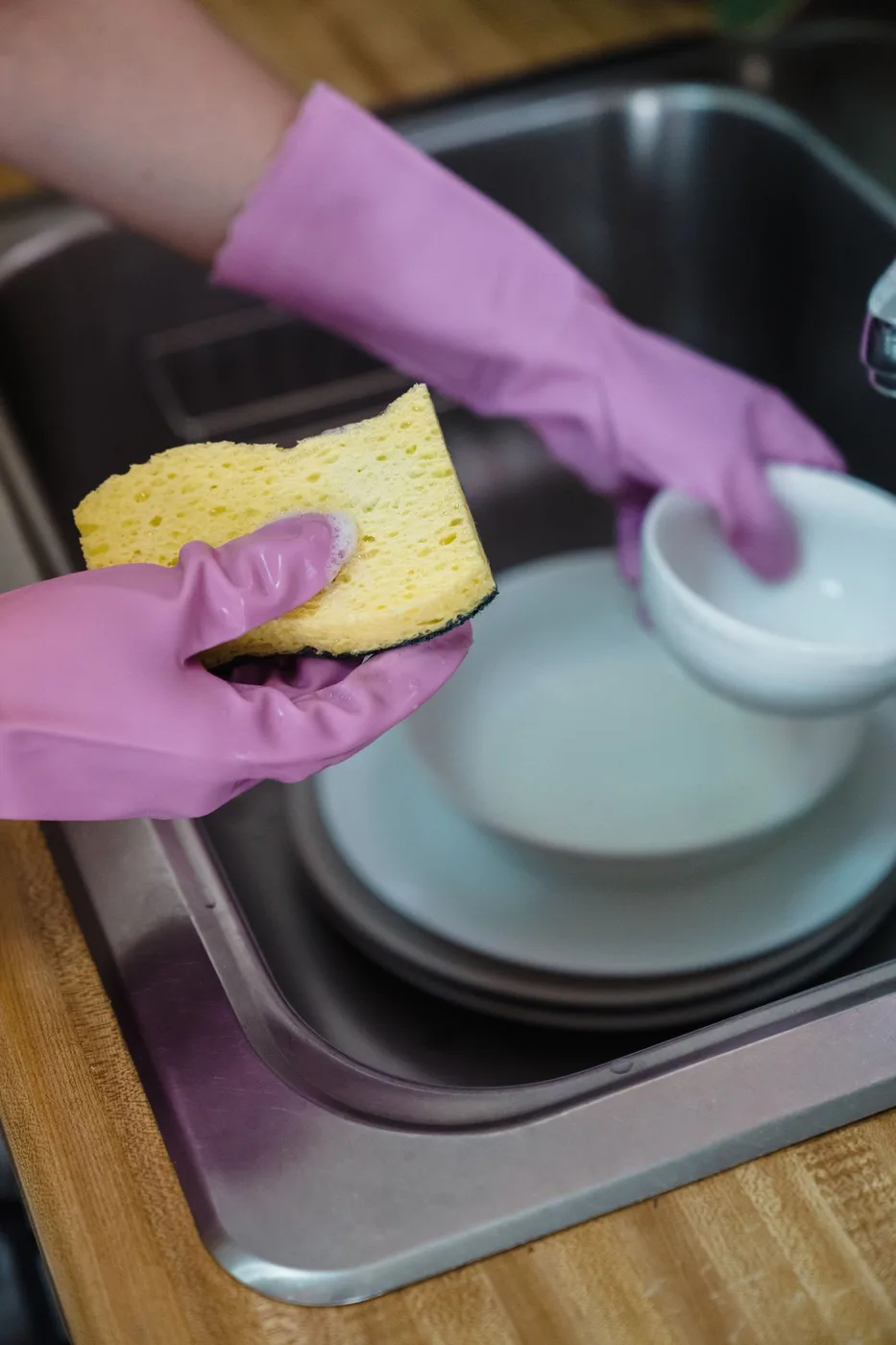
Start with one normal washing session. A household using a dishwasher for plates but handwashing pans needs a different rack from a couple washing every dish by hand. These are buying criteria drawn from household workflow and published product information, rather than hands-on rack testing.
Drainage and usable loading space matter more than the number of advertised slots. Match the rack to a normal washing session and measure the route back to the sink.
Measure a complete washing session
Lay your usual handwashed items on a towel: the large pan, two glasses, the chopping board, and whatever else remains after dinner. Notice the awkward pieces. A rack advertised for many plates may offer little stable support for a deep pot or a reusable bottle.
Measure the counter space with the faucet operating and the cupboard door open. Include the utensil cup and any protruding drain spout. Then check whether a loaded rack would interfere with reaching the tap, opening the dishwasher, or carrying a pan to the stove. Those are useful dimensions that a product photograph cannot establish.
Follow the water before choosing a shape
A draining tray must have a realistic route into the sink. A raised sink lip, an unusually thick rim, or a counter sloping slightly away from the basin can make a promising spout ineffective. Use the manufacturer's dimensions and inspect your sink from the side.
A removable tray can work where direct drainage does not, but someone has to empty and wash it. A drying mat is flexible for occasional use, yet it also needs laundering and complete drying. Do not choose a drainage system on the assumption that water will somehow disappear beneath the dishes.
| Rack style | Useful household situation | Tradeoff to accept |
|---|---|---|
| Countertop with drain | Frequent handwashing beside a compatible sink | Permanent working-space footprint |
| Folding rack | Intermittent washing and limited prep space | Needs a dry storage location |
| Over-sink support | A suitable basin with spare working access | Temporarily occupies the sink |
| Mat plus small rack | A few glasses or small loads | Mat care and less pan support |
Check support rather than slot count
Look at how plates lean, where handles land, and whether a pot could shift the center of weight. Closely spaced slots may not accommodate thick stoneware. A deep utensil cup can be difficult to clean if the base is inaccessible; a removable one simplifies the job.
Tall over-sink structures need careful checks for faucet height, cabinet clearance, and stability. Skip a tiered rack if reaching the upper level requires stretching over sharp utensils. If young children help with cleanup, keep their everyday dishes at a height they can reach without disturbing heavier pieces.
Decide whether folding is genuinely useful
The OXO Good Grips Aluminum Fold Flat Dish Rack has a two-layer arrangement, a removable utensil cup, and a folding design according to its product page. Those features suit a kitchen where the drying area sometimes becomes a preparation area. The benefit depends on actually putting it away.
Identify a cabinet opening or shelf for the closed rack before buying. A rack folded flat but left on the same counter has not released much usable space. Allow it to dry first and avoid trapping a damp tray against the inside of a cupboard. Check the current manufacturer's dimensions against your paper footprint.
Make cleaning part of the selection
Removable components and open corners are easier to inspect than narrow sealed channels. Consider the time required to clean beneath the tray, around feet, and inside utensil holders. A minimalist shape can be useful when you have hard-water residue to remove, but the material's care instructions still govern which cleaner is suitable.
USDA recommends cleaning kitchen utensils and boards appropriately and allowing them to air-dry or using clean single-use paper towels in its food-handling guidance. Give wet pieces space rather than stacking them in a dense pile. A rack provides support; it does not sanitize dishes or compensate for inadequate washing.
Avoid paying for unused capacity
If clean dishes remain in the rack for days, examine the cupboard first. A rack twice the size can make delayed putting-away more comfortable while leaving the original problem unresolved. Move daily plates to an accessible shelf and remove pieces that block them.
Prioritize a stable base, suitable drainage, and room for the items you actually wash. Decorative finishes, extra cup arms, and multiple tiers are worthwhile only if they improve that routine. For an occasional handwashed skillet, a simple support and an existing washable mat may be enough.
Shopping notes
Use these options as a starting point, then check dimensions, current materials, care instructions, availability, and the retailer’s return policy before ordering.
OXO Good Grips Aluminum Fold Flat Dish Rack
Consider it for: A kitchen that alternates between a drying area and extra preparation space.
The tradeoff: Measure the open footprint and plan where the completely dry rack will live when folded.
Explore at the official site External merchant link · no affiliate commissionYour questions, answered
Is an over-sink rack best for every small kitchen?
No. It can release counter space but occupy the basin or interfere with the faucet. Measure the sink rim, tap travel, and loaded height before deciding whether that exchange helps your kitchen.
Can I store dishes while they are still damp?
Let them dry thoroughly before placing them in enclosed storage. Avoid nesting wet bowls or sealing a wet rack in a cabinet; the drying stage needs space and time.
Should I choose a larger rack for guests?
Size the daily rack for normal use. For occasional extra dishes, an existing washable mat or a second washing-and-putting-away cycle may be easier than sacrificing permanent preparation space.
Sources & further reading
Product and care details were checked against the sources below on October 18, 2026. Our practical recommendations are editorial judgments, and a listed source does not imply endorsement.
- OXO: Aluminum Fold Flat Dish RackChecked 2026-10-18
- USDA: Washing Food — Does it Promote Food Safety?Checked 2026-10-18