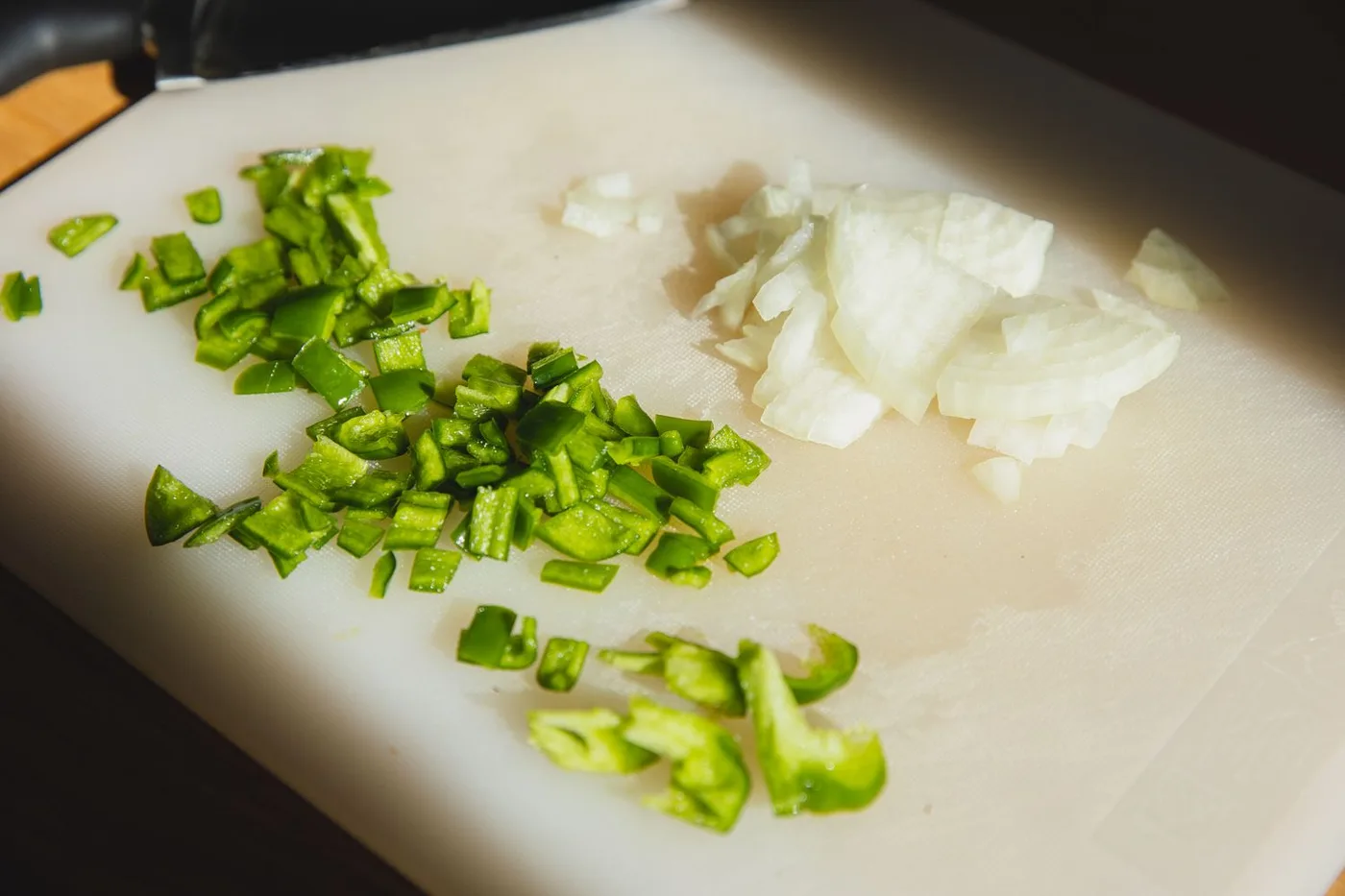
Preparing chicken tacos can mean chopping lettuce, cutting raw chicken, and slicing the finished meat in the same short stretch of evening. The board decision is partly about material, but it is also about the sequence of those tasks and whether a clean surface is available when you need it.
Wood and plastic both come in many constructions. Rather than declaring one universal winner, choose around the size of your sink, how you wash dishes, and how much care you will actually maintain.
Choose the board you can clean, lift, and dry properly. A useful two-board routine separates ready-to-eat preparation from raw meat, with clear homes for both.
Start with a safe preparation sequence
USDA advises using a clean cutting board, washing between foods, and, when possible, keeping a separate board for raw meat, poultry, and seafood. A separate color or shape can make that distinction obvious during a hurried meal. It does not replace cleaning.
Arrange the kitchen so the raw-food board can travel to the sink without crossing the ready-to-eat area. Keep a clean board available for cooked food rather than returning it to the raw board. Plan utensil cleaning too; changing the board while reusing the contaminated knife leaves the workflow unfinished.
Choose wood when the care routine fits
A substantial wooden board can offer a comfortable preparation area and enough weight to feel settled on the counter. The practical drawback is that it may be awkward to lift, wash, and store in a compact kitchen. Check the weight and imagine moving it with wet hands.
Wood care depends on the maker and construction. John Boos provides dedicated care guidance and wood-maintenance products for its boards. Budget time for the prescribed washing, drying, and conditioning routine instead of treating a wood board as a dishwasher item. A handsome board that lives damp beside the sink is a poor purchase.
Choose plastic when easy handling matters
A lighter plastic board can be convenient for a separate raw-food station or a small kitchen where the board is frequently moved. Check the actual manufacturer's cleaning instructions; being plastic does not automatically establish dishwasher suitability or resistance to a particular temperature.
Pay attention to rigidity and grip. A thin flexible mat may be useful for transferring chopped vegetables, but it can curl or slide if unsupported. A substantial board with a stable base may be easier for everyday chopping. Examine worn surfaces regularly and replace pieces that become difficult to clean.
| Question | Wood consideration | Plastic consideration |
|---|---|---|
| Can I comfortably lift it? | Larger boards may be heavy | Often easier to move |
| How will I wash it? | Follow hand-care instructions | Check dishwasher permission |
| Where will it dry? | Allow suitable exposed drying space | Avoid tightly stacking wet boards |
| What maintenance will I do? | May require conditioning | Monitor damage and distortion |
Get the size and shape right
Use your largest common ingredient as the guide: a bunch of greens, a loaf, or a family dinner's worth of vegetables. A board should leave working space around that food. A very small board can encourage crowded cutting and frequent transfers; an oversized board may not fit the sink.
Measure the dishwasher rack if that is your intended cleaning method. Include handles and feet, and check storage height. A juice groove may help with particular tasks but reduces the flat cutting area and creates another channel to clean. Skip it if you mostly prepare vegetables and prefer the extra surface.
Make drying and storage part of the plan
Identify a place where the cleaned board can dry according to its care instructions without blocking the whole kitchen. Do not wedge wet boards tightly together or leave a heavy board balanced where it can fall. A vertical holder is useful only if the board fits steadily and the holder can be cleaned.
Use a recognizable storage position for each board, such as the produce board toward the front and the raw-food board behind it. This is a memory aid for adults who share cooking. Plain labels on the storage holder can be clearer than relying on subtle differences in color.
Know when to stop maintaining and replace
USDA recommends replacing boards that become excessively worn or develop grooves that are hard to clean. Inspect the entire surface and edges rather than keeping a board solely because it is expensive. A damaged closure-free object can still be unsuitable for food preparation.
Avoid paying extra for appearance before solving handling and cleaning. You do not need a full display of boards for daily meals. Two appropriate boards, a safe prep sequence, and a reliable cleaning routine can serve a household better than a large collection stored damp in a drawer.
Shopping notes
Use these options as a starting point, then check dimensions, current materials, care instructions, availability, and the retailer’s return policy before ordering.
John Boos maple cutting-board collection
Consider it for: Comparing sizes and constructions when a substantial wooden preparation board suits your routine.
The tradeoff: The care routine and handling weight must suit your kitchen; confirm instructions for the specific board.
Explore at the official site External merchant link · no affiliate commissionYour questions, answered
Can one board handle a whole meal?
It can only move between tasks with appropriate cleaning and any needed sanitizing. A separate board for raw meat and another for ready-to-eat foods makes that sequence easier to manage.
Do I need a very thick wooden board?
Thickness is useful only if the resulting weight and care needs fit your routine. Choose a board you can lift safely and wash thoroughly, with enough usable area for the ingredients you prepare.
Will a groove keep the counter completely clean?
No. A groove has finite capacity and adds a channel to wash. Consider it a task-specific feature, particularly for juicy food, rather than a substitute for a sensible preparation area.
Sources & further reading
Product and care details were checked against the sources below on October 18, 2026. Our practical recommendations are editorial judgments, and a listed source does not imply endorsement.
- USDA: Preventing cutting-board cross-contaminationChecked 2026-10-18
- John Boos: Care and MaintenanceChecked 2026-10-18
- John Boos: Maple Cutting BoardsChecked 2026-10-18